What does an enzyme look like?
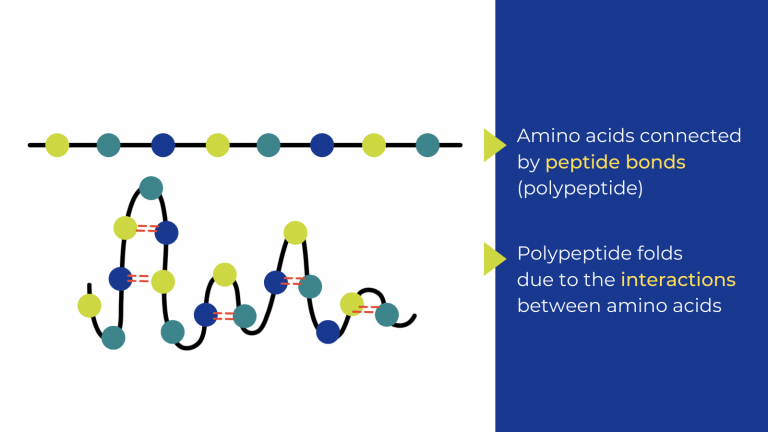
There are around 20 different types of amino acids in Nature, and they are crucial in defining an enzyme’s characteristics. An enzyme is made up of a sequence of amino acids, varying greatly on number. Some may just have 50 amino acids, some may have more than 200.
Here, the variability is enormous: proteins can have different lengths, and can be formed only by some of the around 20 available amino acids. That’s why In Nature, there are millions of different proteins, each one with a particular amino acid sequence.
Also, they tend to fold into themselves, that’s why you’ll usually see images of enzymes represented like this:
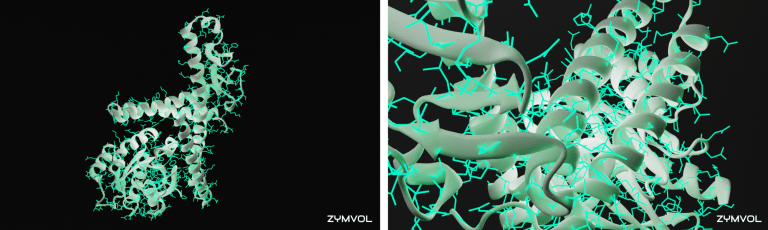
However, the most important thing to know is that an enzyme’s amino acid sequence defines its shape. And its shape determines its function.
How does biocatalysis work?
As we mentioned previously, enzymes’ function is to catalyze chemical reactions. A catalyst is a molecule that increases the rate of a chemical reaction without being consumed by the reaction.
Enzymes catalyze all reactions that take place in living organisms, and these reactions can be of different types, like synthesis or degradation of products, among others.
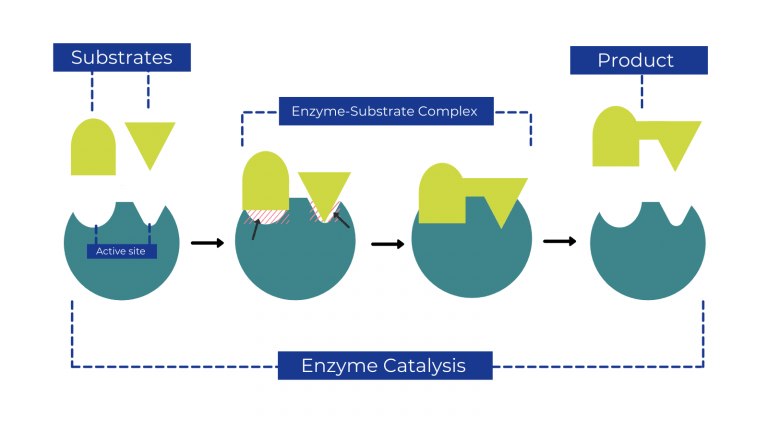
To understand the process better, take a look at the following image, which represents the most accepted model of enzyme catalysis, the Induced Fit model, representing a synthesis reaction (formation of a product):